Reevaluating the future commercial viability of the Northern Sea Route
By Elías ThorssonJune 27, 2024
1565
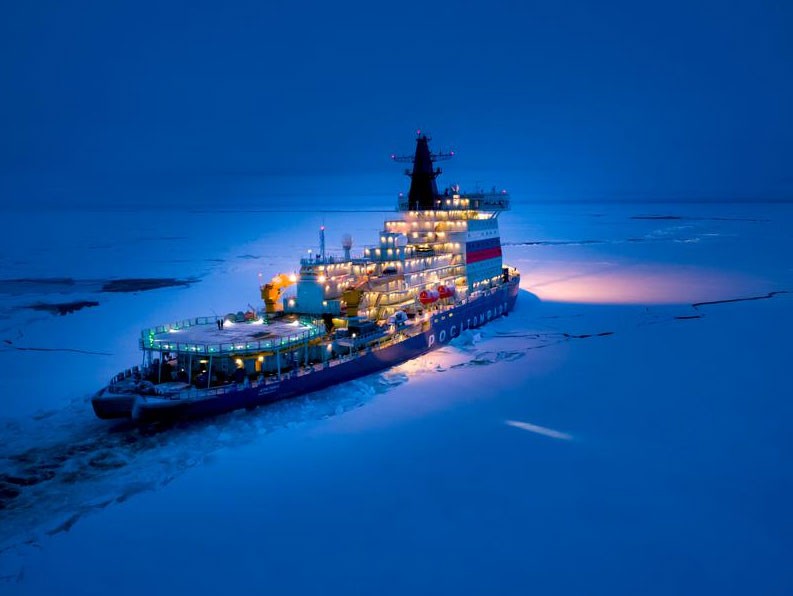
A ship travels through the North Sea Route. (Rosatom via The Independent Barents Observer)
In a recent article, the publication Ship Technology reported on Russia’s push to turn the Northern Sea Route (NSR) into a potential alternative to traditional shipping routes like the Suez Canal. The dual pressures of melting Arctic ice and disruptions in the Red Sea has caused a reevaluation of the cost-benefit calculation of using the route. As Russia and China spearhead efforts to develop this Arctic passage, several factors and potential risks are under scrutiny to determine its future as a commercially viable shipping lane:
The recent hijacking of the Galaxy Leader by Houthi rebels in the Red Sea has highlighted vulnerabilities in this critical shipping corridor. As attacks persist, shipping companies are exploring alternatives, including the longer but safer route around the Cape of Good Hope.
Russia is capitalizing on these disruptions to promote the NSR as a new global shipping artery. The Russian state nuclear agency, Rosatom, has partnered with China’s Hainan Yangpu New Shipping to develop year-round operations on the NSR, including the construction of new ice-class vessels. Russia plans significant investments, with projections to move 80 million tonnes of cargo annually via the NSR by the end of 2024.
Despite the Arctic ice melting, the NSR still demands specialized icebreakers, which Russia dominates with its fleet of nuclear-powered vessels. The Arctic’s harsh conditions and limited port infrastructure along the NSR present significant operational and safety challenges.
The NSR’s potential as a global trade route is clouded by geopolitical issues, especially given Russia’s conflict with Ukraine and strained relations with Western nations. Russia and China’s strategic partnership in the Arctic may limit the NSR’s appeal to Western shipping companies, wary of operating under Moscow’s influence.
The Barents Sea, part of the NSR, has seen a surge in cyberattacks from Russia-linked groups like ‘Forest Blizzard,’ targeting maritime infrastructure.
These cybersecurity risks add another layer of complexity for operators considering the NSR, potentially deterring broader adoption.
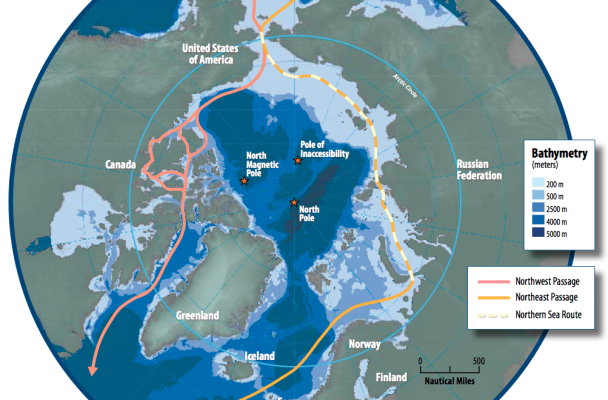
A map of the Arctic showing the Northern Sea Route and other routes. (Susie Harder / Arctic Council)
This website uses cookies to improve your experience. We'll assume you're ok with this, but you can opt-out if you wish. Cookie settingsACCEPT
Privacy & Cookies Policy
Privacy Overview
This website uses cookies to improve your experience while you navigate through the website. Out of these cookies, the cookies that are categorized as necessary are stored on your browser as they are essential for the working of basic functionalities of the website. We also use third-party cookies that help us analyze and understand how you use this website. These cookies will be stored in your browser only with your consent. You also have the option to opt-out of these cookies. But opting out of some of these cookies may have an effect on your browsing experience.